RPO Services in 2026: Why Companies Are Switching Faster Than Ever
RPO services are becoming a preferred hiring model for companies that want speed, flexibility, and better hiring outcomes. As businesses grow in unpredictable ways in 2026, traditional recruitment methods are struggling to keep up.
When hiring starts feeling slow, expensive, or inconsistent, the issue is rarely the HR team. More often, it is the structure behind the hiring process.
This article explains how modern hiring works today, why outsourcing recruitment is accelerating, and how to decide whether this approach fits your business.
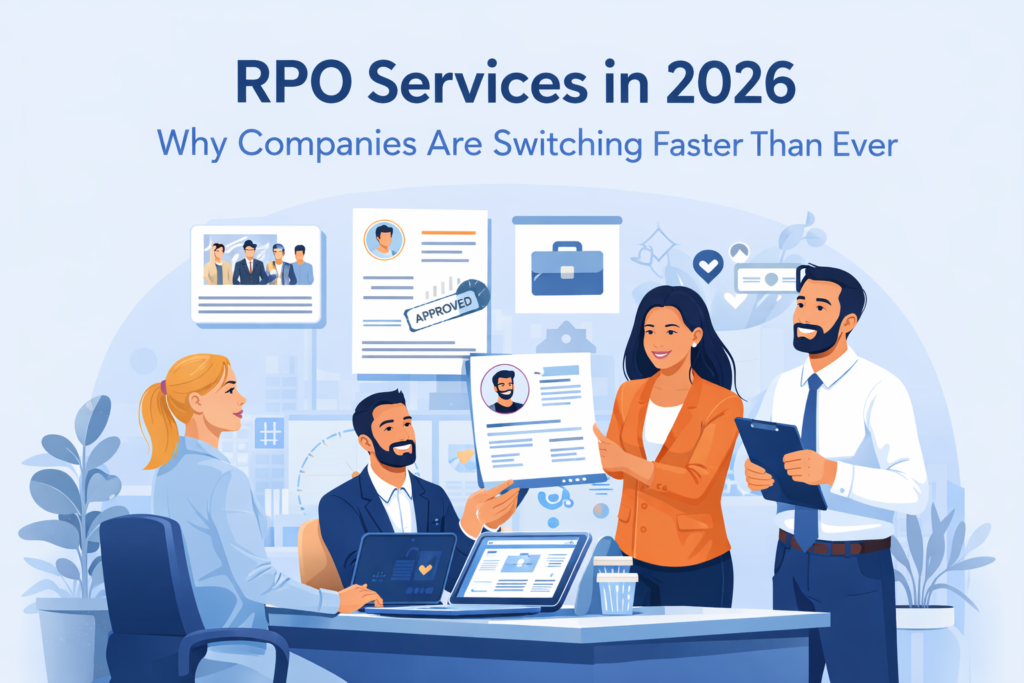
Table of Contents
- What RPO Means in Today’s Hiring Market
- Why Hiring Is Harder Than Ever in 2026
- The Hidden Costs of In-House Recruitment
- Why Companies Are Moving to Outsourced Hiring
- RPO vs In-House Recruitment
- When Outsourcing Hiring Is Not Ideal
- Industries That Benefit the Most
- How to Choose the Right Partner
- The Future of Recruitment
- Final Takeaway
What RPO Means in Today’s Hiring Market
RPO services involve partnering with an external recruitment team that manages hiring responsibilities on your behalf. Unlike traditional staffing agencies, this model focuses on owning the entire recruitment lifecycle.
This includes sourcing candidates, screening, interview coordination, reporting, and improving hiring efficiency. The external team works closely with internal stakeholders and aligns hiring goals with business needs.
Why Hiring Is Harder Than Ever in 2026
The hiring landscape has changed dramatically. Companies now compete globally for talent, candidates expect faster processes, and roles are becoming more specialized.
Common challenges include overworked HR teams, delayed approvals, poor candidate experience, and offer drop-offs. These issues slow growth and affect productivity across teams.
Hiring delays are no longer just an HR concern. They directly impact business performance.
The Hidden Costs of In-House Recruitment
In-house hiring often looks affordable at first, but hidden costs quickly add up.
These costs include recruiter salaries, job portals, hiring tools, interview time from senior staff, and the financial impact of wrong hires. A poor hiring decision can cost up to half of an employee’s annual salary.
Cost Comparison Overview
| Factor | In-House Hiring | Outsourced Hiring |
|---|---|---|
| Cost Structure | Fixed | Flexible |
| Time to Hire | Longer | Faster |
| Scalability | Limited | High |
| Hiring Expertise | Generalist | Specialist |
This is one of the key reasons RPO services are gaining traction among growing companies.
Why Companies Are Moving to Outsourced Hiring
Several factors are driving the shift away from traditional hiring models.
Businesses need the ability to scale teams quickly without long-term commitments. Global and remote hiring have become normal. At the same time, leadership teams want better hiring results without increasing internal headcount.
Outsourcing recruitment allows companies to stay agile while maintaining quality and control.
Industry research from platforms like SHRM and LinkedIn Talent Solutions also shows a steady rise in adoption of external recruitment models.
RPO vs In-House Recruitment
Here is a practical comparison between internal hiring teams and external recruitment partners.
| Area | In-House Recruitment | RPO Model |
|---|---|---|
| Hiring Speed | Slower | Faster |
| Cost Control | Difficult | Predictable |
| Process Ownership | Fragmented | End-to-end |
| Reporting | Limited | Data-driven |
For companies hiring regularly, RPO services provide consistency that internal teams often struggle to maintain.
When Outsourcing Hiring Is Not Ideal
This model is not suitable for every situation.
It may not be the right fit if your company hires only a few people per year, needs to fill confidential leadership roles, or requires a single short-term hire.
Being clear about this avoids unrealistic expectations.
Industries That Benefit the Most
External recruitment models work especially well for:
- IT and software companies
- SaaS startups
- Healthcare organizations
- Manufacturing businesses
- Remote-first teams
These industries require speed, flexibility, and access to specialized talent pools.
How to Choose the Right Partner
Before selecting a recruitment partner, evaluate their industry experience, hiring timelines, reporting structure, pricing transparency, and communication process.
A good partner focuses on long-term hiring success, not just quick placements.
The Future of Recruitment
The future is not about replacing HR teams. It is about balance.
Internal HR teams focus on culture, engagement, and retention, while RPO services handle execution, sourcing, and optimization. This hybrid approach is already becoming standard for high-growth businesses.
Final Takeaway
RPO services are not about giving up control. They are about upgrading how hiring works.
If recruitment feels harder than it should, the problem is often the model, not the people. Companies that adapt now will hire faster, reduce costs, and build stronger teams in the years ahead.